The Polybutylene Crisis Across 1980s & 1990s Colorado Homes
Between 1978 and 1995, an estimated ten million homes nationwide were plumbed using polybutylene (frequently marketed under the brand name Quest). During this precise window, rapid suburban master-planned developments exploded across South Metro Denver. As a result, neighborhoods across Highlands Ranch, Parker, Centennial, Lone Tree, and Castle Rock represent one of the highest concentrations of defective polybutylene plumbing in the Western United States.
Why Polybutylene Fails from the Inside Out
Unlike copper or steel pipes that exhibit external rust, discoloration, or weeping verdigris prior to failure, polybutylene looks completely normal on the outside until the moment it splits. The fundamental failure mechanism is internal chemical decomposition:
1. Chlorine & Chloramine Degradation
Water treatment facilities introduce chlorine and chloramines to disinfect municipal drinking supplies. These chemical oxidizers react directly with the polybutylene resin, triggering micro-fracturing along the inner pipe walls. Over years of exposure, the flexible polymer becomes brittle, flaky, and structurally compromised.
2. Acetal Plastic Fitting Blowouts
Early polybutylene systems utilized white or gray acetal plastic insert fittings secured with aluminum or copper crimp rings. Chemical disinfectants attack acetal even faster than the pipe itself. The fitting teeth shear off under normal household water pressure, popping out of the pipe entirely and unleashing full-volume water flow inside finished ceilings and wall cavities.
3. Elevation Pressure Shock Waves
High-elevation terrain throughout Douglas and Arapahoe counties results in municipal supply line pressures that routinely spike over 90 to 110 PSI. When quick-closing appliances (like washing machines or dishwashers) shut off, the resulting hydraulic shock wave shatters brittle polybutylene joints instantly without an operational Pressure Reducing Valve (PRV).
Real Estate & Homeowners Insurance Roadblocks
Buying or selling a home with polybutylene plumbing has become extraordinarily difficult along the Front Range. Home inspectors flag gray Quest pipes immediately during buyer walkthroughs.
Major insurance carriers—including State Farm, Farmers, and Liberty Mutual—frequently refuse to write homeowner policies on homes with active polybutylene, or they attach catastrophic water damage exclusions. Without proof of whole-home repiping, lenders halt mortgage approvals. Just Plumbing works directly with buyers, sellers, and real estate brokers to perform rapid, code-compliant repipes that satisfy escrow closing deadlines.
Permanent Whole-Home Repiping with Uponor PEX-A
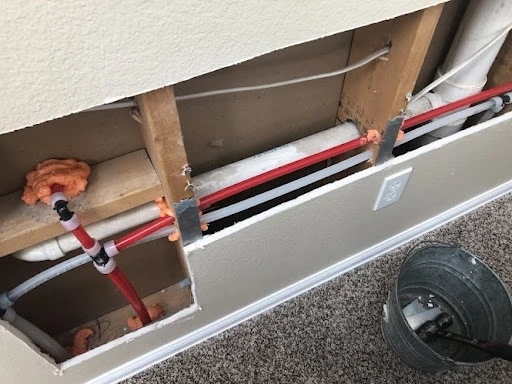
Patching polybutylene with push-fit or transition crimp fittings is never an acceptable long-term solution. Because the plastic pipe is decomposing globally from internal chemical attack, clamping a new joint simply transfers hydraulic stress to the next brittle foot of pipe. Complete replacement is the only way to safeguard your property and secure full homeowner insurance coverage.
At Just Plumbing, Inc., Master Plumber Bill Clark completes whole-home polybutylene extractions using professional Uponor PEX-A expansion tubing (backed by a 25-year manufacturer material warranty and our 5-year workmanship warranty) or rigid Type L Copper. Learn more about our process in our Whole-Home Repiping Guide or review our direct field experience in the Highlands Ranch Polybutylene Case Study.
Frequently Asked Questions — Polybutylene Repiping
How do I identify polybutylene pipes in my home?
Polybutylene pipes are flexible plastic lines that are dull gray (sometimes blue or black) in color, typically stamped with the manufacturer code 'PB2110'. They are most easily spotted at exposed connections above your water heater, under kitchen and bathroom sink vanities, or entering the main water shutoff valve in your basement.
Will homeowners insurance cover polybutylene pipe leaks in Colorado?
Many major Colorado insurance underwriters will no longer write new policies, renew existing coverage, or pay out full water damage claims for homes with active polybutylene plumbing. Insurance carriers view polybutylene as a guaranteed failure risk due to internal micro-fracturing from municipal water disinfectants.
Can polybutylene pipes be repaired instead of fully replaced?
No. Patching a single polybutylene leak with transition couplings only shifts mechanical line pressure to adjacent brittle sections. Because the plastic pipe is decomposing globally from internal chemical attack, whole-home repiping is the only permanent, code-compliant, and insurable solution.
How long does a whole-home polybutylene repipe take?
Just Plumbing completes most whole-home polybutylene repiping projects in just 1 to 2 business days. Our non-invasive process ensures that domestic water service is fully restored to your home at the end of each workday.